2-Pac, Laminate Or Timber Veneer? How To Choose Kitchen Cabinet Finishes And Hardware For A Coastal Home
Choosing cabinetry for a kitchen renovation involves more than finding a colour you like. Your doors and drawers need to suit everyday cooking, cleaning and family activities while complementing your home.
When comparing kitchen cabinet finishes, laminate offers practical value, 2-pac polyurethane provides a refined custom-colour appearance and timber veneer brings natural warmth. The right hardware comes down to how you use your kitchen.
For coastal homeowners, humidity and salt air add another consideration. Discussing your options with cabinet makers in Byron Bay can help you understand each finish's strengths and limitations before production.
Which Kitchen Cabinet Finish Is Best? The Quick Answer
There isn't one finish that suits every kitchen. Laminate is a practical choice for busy households, while 2-pac polyurethane offers greater colour flexibility and a smooth, painted appearance. Timber veneer provides the character of real timber without the higher cost of solid timber cabinetry. Acrylic and melamine also offer alternatives depending on the application. The best choice balances appearance, daily wear, moisture exposure and budget.
A quick comparison can help narrow your options:
- Laminate suits households wanting durability, easy upkeep and cost-effective cabinetry.
- 2-pac suits homeowners prioritising colour choice and a refined appearance.
- Timber veneer suits kitchens where natural texture and warmth are central to the design.
Once you've identified your preferred appearance, think about the hardware and practical demands of each cabinet.
Is 2-Pac Better Than Laminate for a Busy Family Kitchen?
For families, the decision comes down to how cabinetry handles daily knocks and marks. Laminate has a durable manufactured surface that suits frequently used cupboards and drawers. It's more cost-effective, although it offers less visual depth than painted finishes. 2-pac polyurethane provides a smooth, hard surface in virtually any colour, but its higher upfront cost and vulnerability to chipped edges deserve consideration.
When weighing up the two, look at:
- How frequently doors and drawers are opened, particularly around cooking areas.
- Whether you prefer laminate's practical surface or the smooth appearance of 2-pac.
- The potential cost and complexity of repairing visible chips or damaged edges.
For busy households, laminate offers a practical balance, while 2-pac appeals to those prioritising appearance and customisation.
Matte, Gloss or Textured: Which Finish Hides Fingerprints & Wear Best?
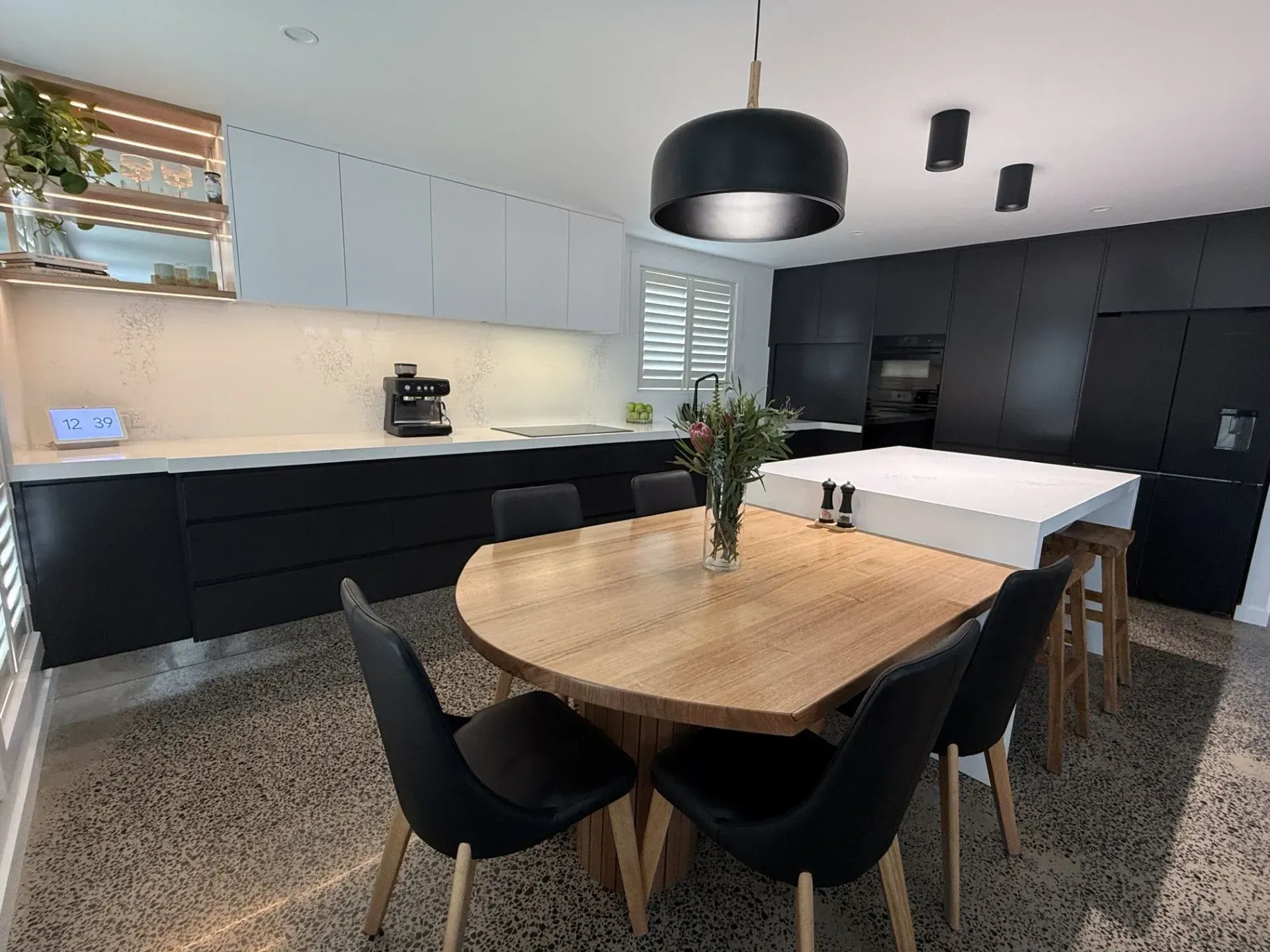
Finish sheen affects how visible everyday marks become. Gloss surfaces reflect light and highlight fingerprints, scratches and smudges, particularly under direct sunlight. Dark matte cabinetry also reveals oily marks around frequently handled cupboards. Textured and timber-look laminates are more forgiving because their patterns disguise minor wear. Acrylic finishes offer another appearance option, although scratch resistance varies between products.
For a kitchen that sees frequent use, you could:
- Choose lightly textured laminate where fingerprints and small marks are a concern.
- Use matte finishes in lighter colours to reduce visible smudges.
- Reserve high-gloss surfaces for areas where their reflective appearance is worth the extra attention.
For advice on how to keep each finish looking its best, our cabinet care article covers ongoing cleaning requirements.
Is Timber Veneer Practical in a Working Kitchen?
Timber veneer offers the appearance of real wood through a thin timber layer bonded to an engineered substrate. It's an appealing mid-range option for coastal interiors, but placement matters. Sinks, dishwashers and cooktops create moisture and steam exposure. Veneer needs suitable sealing, particularly around vulnerable edges. When choosing the right cabinet materials, remember that the finish depends partly on the board beneath it.
To use timber veneer thoughtfully, try:
- Placing timber feature panels away from areas with frequent splashes.
- Selecting moisture-resistant boards and properly sealed edges near wet zones.
- Combining veneer with laminate or 2-pac on heavily used cabinet fronts.
Careful material selection and placement let you enjoy timber's appearance while accounting for everyday kitchen demands.
Handles or Handleless: Which Suits the Way You Use Your Kitchen?
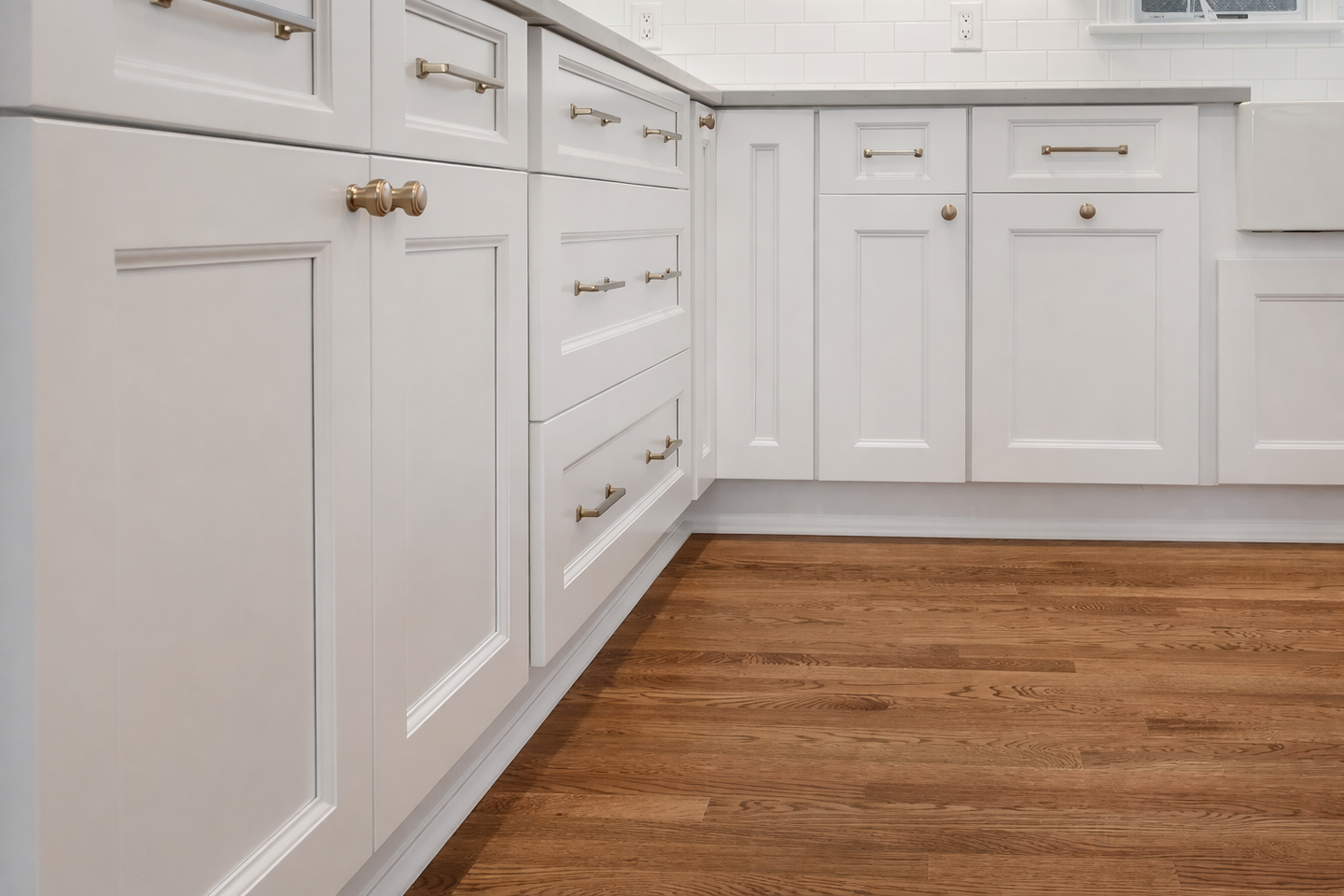
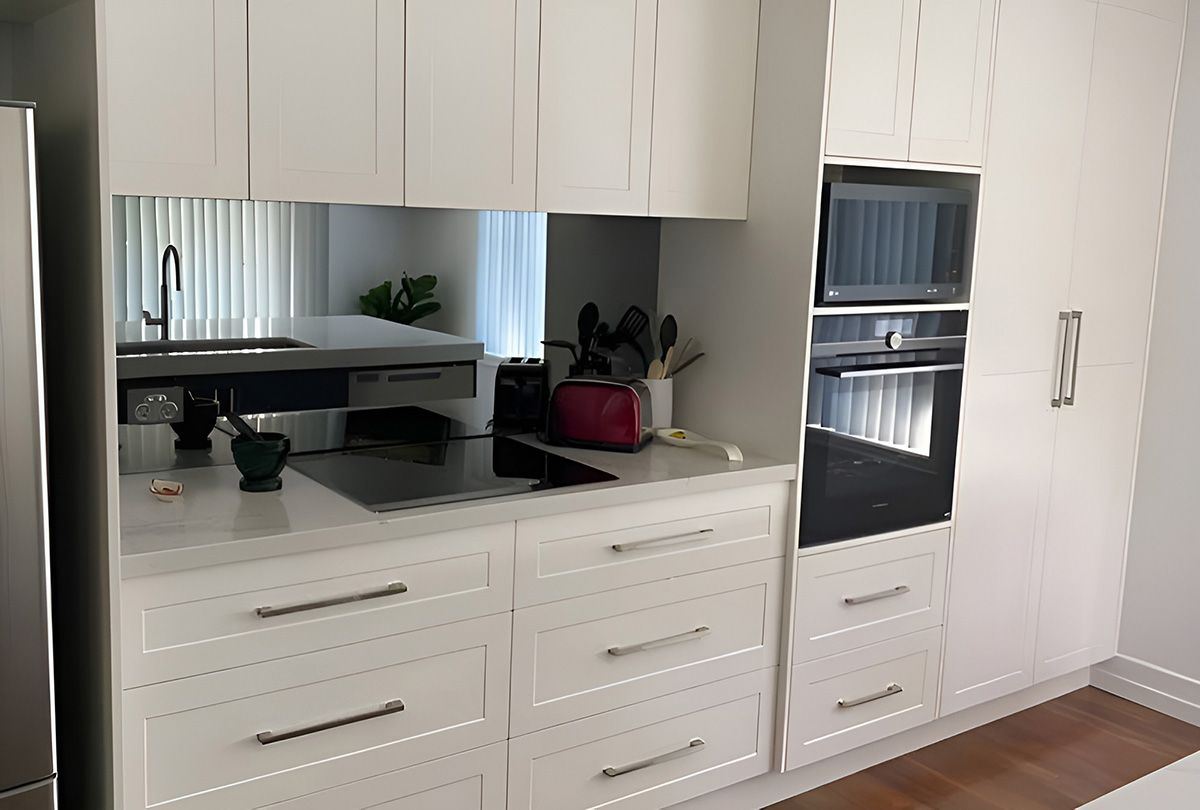
Handleless cabinetry creates uninterrupted lines, making it appealing for contemporary coastal interiors. Integrated finger pulls provide access without projecting handles, while push-to-open mechanisms offer another approach. However, these designs aren't necessarily convenient for every household, particularly when hands are wet or full. Traditional handles provide a defined grip and opportunities to introduce decorative accents.
Your hardware decision should account for:
- Finger pulls or push mechanisms where a streamlined appearance is the priority.
- Brushed brass or matte black handles for contrast against timber and neutral cabinetry.
- Stainless steel or corrosion-resistant hardware where coastal salt exposure is a concern.
Handle materials and protective finishes deserve attention in Byron Bay, where humidity and salt air contribute to corrosion.
Why Soft-Close Hinges & Drawer Runners Matter More Than You Think
Soft-close hardware affects how cabinetry operates every day. Rather than allowing doors and drawers to shut abruptly, these mechanisms slow their closing movement. This reduces slamming noise and repeated impacts on cabinet components. Quality hinges and runners contribute to smooth operation, although performance depends on installation and load capacity. If you want to compare custom, modular and flat pack cabinets, hardware quality is worth examining across different options.
Soft-close mechanisms offer practical advantages by:
- Reducing sudden impacts when cupboard doors and drawers are closed.
- Making frequently used storage areas quieter during everyday activities.
- Supporting controlled movement when components are correctly fitted and maintained.
Selecting suitable hardware during design helps avoid unnecessary changes after installation.
How to Match Finishes & Hardware to Your Home
The most suitable combination depends on how your kitchen will be used. Families prioritise durable surfaces, while holiday rentals benefit from finishes that tolerate frequent use. Entertainers often prefer feature cabinetry that creates visual interest. When comparing kitchen cabinet finishes, consider your lifestyle, maintenance expectations and budget rather than appearance alone.
To match your cabinetry to different household needs, you could:
- Choose textured laminate with soft-close drawers and easy-grip handles for a busy family kitchen.
- Opt for moisture-resistant cabinetry and corrosion-resistant hardware in a beach house or investment property.
- Pair timber veneer features with 2-pac cabinetry and understated handles for an entertainer's kitchen.
These combinations provide a starting point, allowing individual preferences and budgets to guide the final selection.
Make Your Kitchen Finish and Hardware Choices with Confidence
At Paul Tagget Kitchens, we've been making cabinetry since 2012 from our Goonellabah workshop, servicing Byron Bay and the Northern Rivers. Our process covers consultation, measurement, material selection, design approval, manufacture and installation.
We encourage homeowners to compare kitchen cabinet finishes and hardware before approving their design. Changes after manufacture begins can create additional costs and delays.
If you're comparing cabinet makers in Byron Bay, book a design consultation to see and handle finish samples and hardware before committing.
Frequently Asked Questions
What Is the Most Durable Kitchen Cabinet Finish?
Laminate is often a practical choice for durability, particularly in frequently used kitchens. However, performance depends on product quality, edge protection and everyday use. Two-pack polyurethane and other finishes have different strengths, so the most suitable option depends on where the cabinetry is installed and how it's used.
What's the Difference Between 2-Pac & Laminate?
2-pac polyurethane is a painted coating applied to cabinet surfaces, offering a smooth appearance and extensive colour options. Laminate is a manufactured decorative surface bonded to a board. Laminate generally costs less and suits frequent use, while 2-pac offers greater colour flexibility but can chip around exposed edges.
Do Matte Kitchen Cabinets Show Fingerprints?
Yes, matte cabinet fronts can show fingerprints, particularly darker colours and smooth surfaces. Oils from hands sometimes create visible marks even without a reflective finish. Lightly textured materials and lighter colours tend to disguise everyday smudges more effectively, although results vary between products.
Which Cabinet Handles Are Best for Coastal Homes?
Handles with suitable corrosion resistance are worth prioritising in coastal environments. Stainless steel and appropriately finished metal hardware are practical options, although their suitability depends on material grade and exposure. Brushed brass and matte black finishes can also work when the product is designed for the intended conditions.
Can I Change My Cabinet Finish or Hardware Later?
Yes, but the work involved depends on the existing cabinetry. Replacing handles is often simpler than changing integrated finger pulls or refinishing cabinet doors. Some alterations require new panels or additional machining. Making these decisions before manufacture is usually more straightforward than modifying completed cabinetry.